
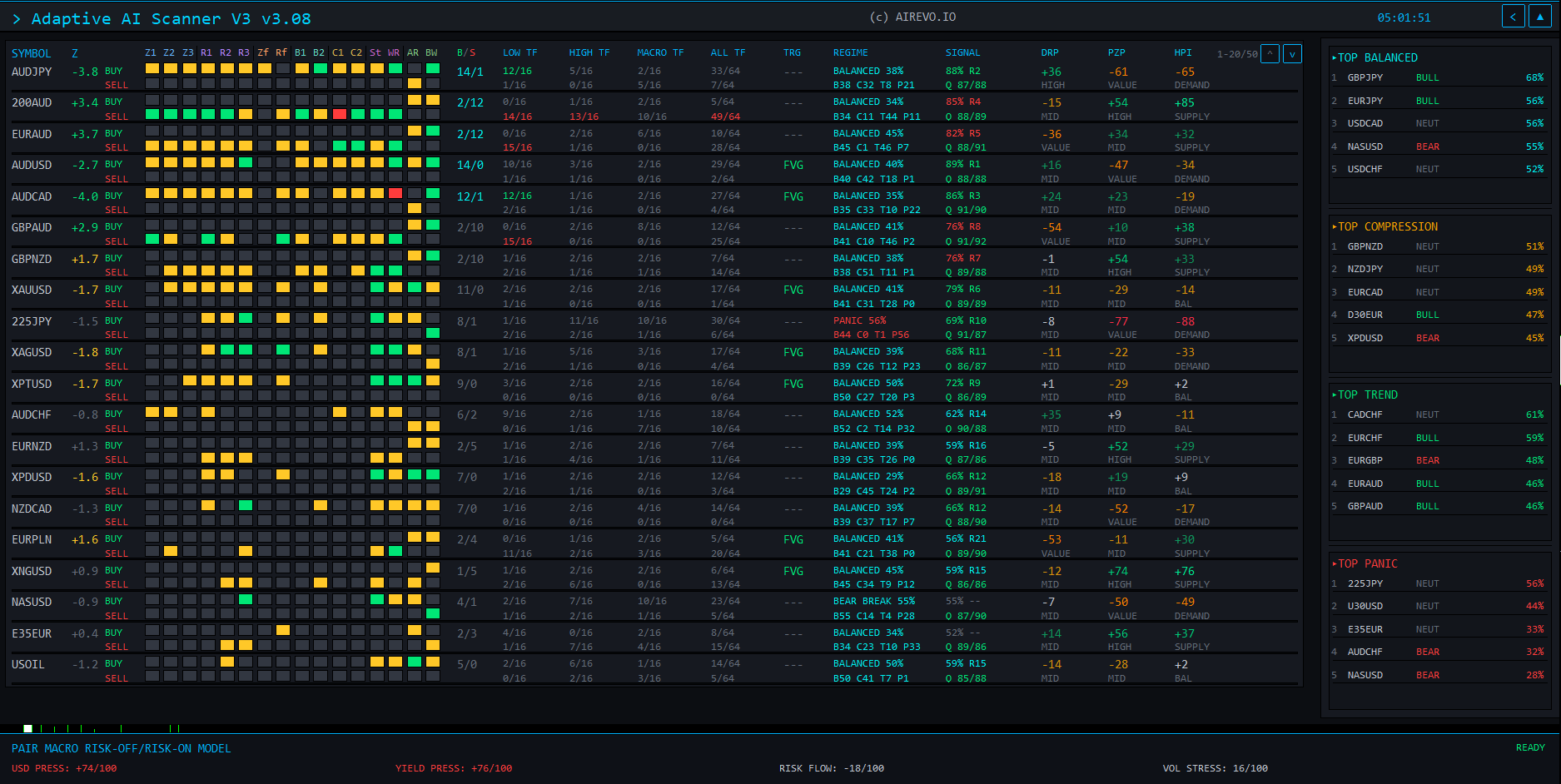
Turn your idea into clear rules
Algorithmic trading is not defined by a robot image or by using the word AI. It begins when entry, exit, sizing and risk decisions are expressed as rules that a computer can execute consistently.
The advantage is not certainty. It is repeatability: the same conditions can be tested on historical data, observed on new data and reviewed in logs.
- Define the market and timeframe
- Specify conditions and invalidation
- Define position size, exits and maximum loss
- Record every decision and result
Six steps from an idea to a demo test
A robust workflow moves through research, rule definition, historical testing, forward testing, demo observation and monitored deployment. Each stage can reject the idea.
- Research a testable hypothesis
- Remove ambiguous rules
- Include realistic costs and execution
- Separate development and validation data
- Observe on demo
- Monitor drift and operational failures
What AI can and cannot add
Adaptive models can help classify regimes, rank observations and adjust to changing context. They do not make data limitations, overfitting or market risk disappear.
Treat AI as another analytical layer that must be understood, bounded and monitored.